Listen In: Are AI Tools Replacing Scrum Masters (19 min)
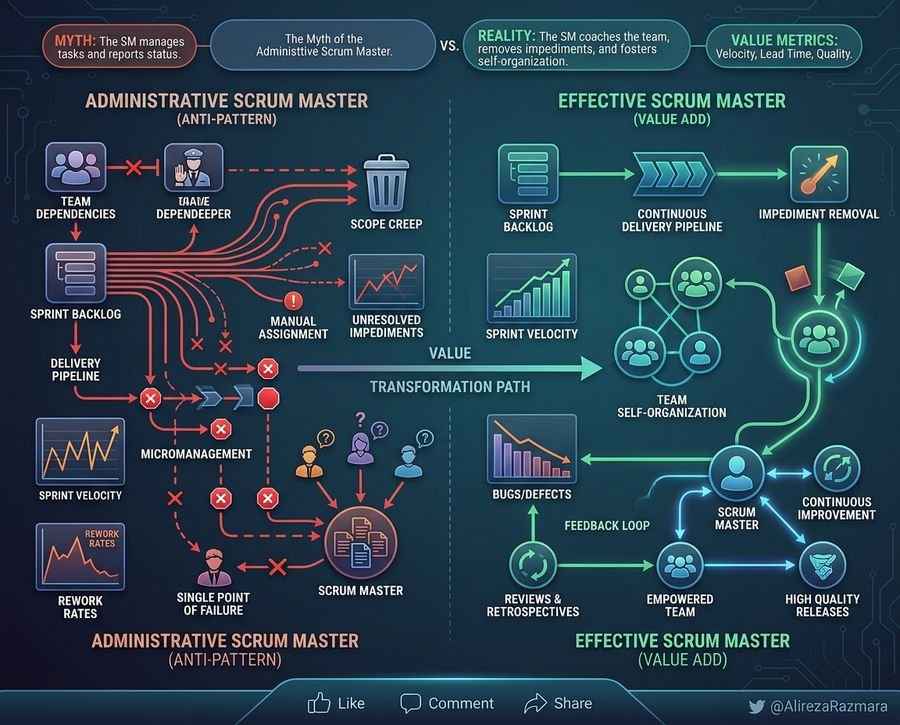
The Myth of the Administrative Scrum Master
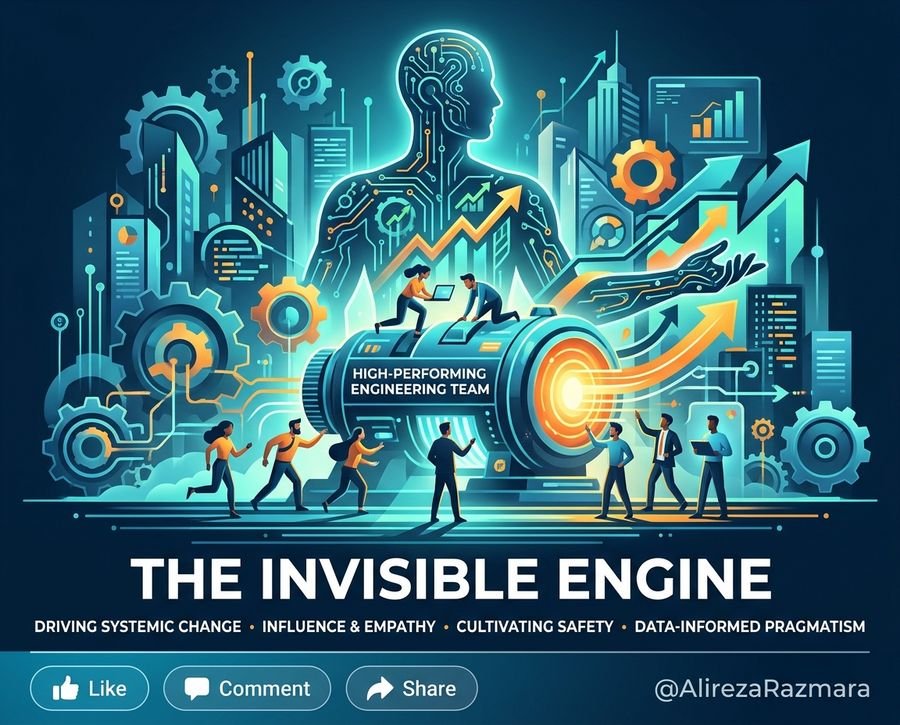
Too often, organizations reduce the Scrum Master role to setting up Daily Standups and moving Jira tickets from “In Progress” to “Done.” This is a massive waste of potential. True Agile mastery goes far deeper than simply facilitating ceremonies. After years of coaching tech leaders and delivery teams, I’ve learned that elite Scrum Masters aren’t defined by how well they memorize the Scrum Guide. They are defined by their human operating system and their ability to drive systemic change. They are the invisible engine behind high-performing engineering teams.
Average facilitators manage the calendar. Exceptional Agile leaders manage the environment. They operate at the organizational level to clear deep-rooted bottlenecks, build immense psychological safety, and use flow data to protect team capacity. If you want to transform a struggling delivery team into a high-velocity powerhouse, you need to understand the four core pillars that separate the good from the truly great.
Systemic Problem Solving: Moving Beyond Surface-Level Blockers
Systemic problem solving means fixing the root cause of a bottleneck instead of just patching the daily symptoms. Exceptional Scrum Masters target organizational drag, map cross-team dependencies, and challenge legacy processes that kill delivery speed.
It is incredibly easy to hear “I’m blocked by the DevOps team” during a morning standup and immediately ping someone on Slack to get a server spun up. That is average facilitation. A senior Scrum Master looks at the board and asks why DevOps is a bottleneck in the first place. They map the value stream. They identify that the staging environment provisioning process is entirely manual and requires three levels of managerial approval. Then, they work with engineering leadership to automate that pipeline entirely. They don’t just clear the road; they pave it.
To transition from reactive unblocking to proactive systemic engineering, focus on these areas:
- Dependency Mapping: Identify which external teams consistently hold up your sprint goals and establish working agreements or API-first integration strategies to decouple the work.
- Process Deconstruction: Routinely ask the team which mandatory corporate processes feel like a waste of time, and take on the burden of negotiating those processes away with senior management.
- Technical Debt Advocacy: Help developers quantify the cost of bad code to the business so Product Owners actually prioritize refactoring.
Influence Without Authority: The Art of Leading Laterally
Influence without authority is the ability to drive behavioral change and strategic alignment despite having zero formal disciplinary power over the team. Elite Agile leaders achieve this through active listening, radical empathy, and building unshakeable trust across all organizational levels.
You cannot fire anyone. You do not control budgets. You do not sign off on annual performance reviews or promotions. Yet, you are entirely responsible for making a highly opinionated group of engineers work better together. How do you do it? By becoming heavily invested in their individual and collective success. You lead by context, not by coercion.
You coach Product Owners on backlog refinement not by lecturing them on the rules of story points, but by showing them exactly how a messy, ambiguous backlog drastically slows down time-to-market. You protect developers from executive context-switching by acting as a diplomatic shield. When the VP of Engineering drops into the team chat with an “urgent” new request, you do not simply say no. You say, “Yes, we can absolutely prioritize that. Which of these active sprint commitments should we drop to make room for it?” You force the trade-off conversation without issuing an order, protecting your engineers’ focus while maintaining absolute professionalism.
Cultivating Psychological Safety for High-Velocity Delivery
Psychological safety is the shared belief that a team member can take risks, voice concerns, or make mistakes without fear of punishment or humiliation. High-velocity engineering requires this safety net so teams can fail fast, speak up during Retrospectives, and debate architecture transparently.
High-velocity code isn’t born in high-stress environments. It is born in environments where engineers aren’t terrified of breaking the build. If your Sprint Retrospectives are dead silent, or if they consistently devolve into finger-pointing exercises, you have a severe psychological safety deficit.
A great Scrum Master spots the quiet engineer in the room and explicitly asks for their input, validating their perspective. They normalize failure by openly celebrating what the team learned from a blown sprint goal rather than hunting for a scapegoat. They create a container where transparent, respectful debate is not just encouraged, but required for the team’s evolution. When engineers know their Agile Coach has their back, they stop hiding their mistakes. They stop padding their estimates out of fear. They start innovating.
Practical steps to build this safety include:
- Blameless Post-Mortems: When an incident occurs, guide the team to investigate the system failures, never the human failures.
- Vulnerability First: Share your own mistakes or misunderstandings openly with the team to demonstrate that nobody is expected to be perfect.
- Protecting the Deviant Voice: Actively support team members who offer unpopular opinions or challenge the group consensus during planning sessions.
Data-Informed Pragmatism: Flow Metrics as a Mirror, Not a Whip
Data-informed pragmatism involves using Agile flow metrics to diagnose systemic health rather than to enforce arbitrary output quotas. Exceptional Scrum Masters track cycle time, lead time, and throughput as a diagnostic mirror for the team, never as a whip to drive developers to work faster.
Velocity is arguably the most abused metric in modern software development. Middle management loves to use it to compare teams, which instantly incentivizes engineers to inflate story points just to look good on a spreadsheet. A senior Scrum Master stops this behavior dead in its tracks. Instead of focusing on arbitrary capacity points, they look at actual flow metrics.
They ask structural questions based on the data. Why is our cycle time wildly inconsistent from week to week? Why do tickets sit in the “In Review” column for an average of four days? They bring this data to the team with curiosity, not judgment. “Hey folks, the data shows a massive bottleneck during QA this sprint. What’s happening there, and how can we collectively help?” They use data to ask better questions, empowering the team to design their own workflow solutions.
The Ultimate Goal: Coaching Yourself Out of a Job
The highest achievement for a Scrum Master is building a self-organizing culture so robust that the team thrives independently. You aren’t there to manage the work; you are there to unlock human potential and step back once the engine runs smoothly.
Many average Agile practitioners hold onto their administrative duties tightly because it makes them feel indispensable. They insist on running every standup, updating every ticket, and mediating every minor dispute. Elite Scrum Masters do the exact opposite. They act as a catalyst. They train developers to facilitate their own daily events. They coach the Product Owner to a point where refinement runs on autopilot. They build a self-healing organism.
Eventually, the team operates at such a high level of autonomy, trust, and delivery speed that the Scrum Master can safely step back, focusing entirely on larger organizational transformations or taking on new, struggling teams. You do not manage teams. You build systems that allow humans to do their best work.