
🎧 Listen In: Should Your Definition of Done Be Automated (17 min)
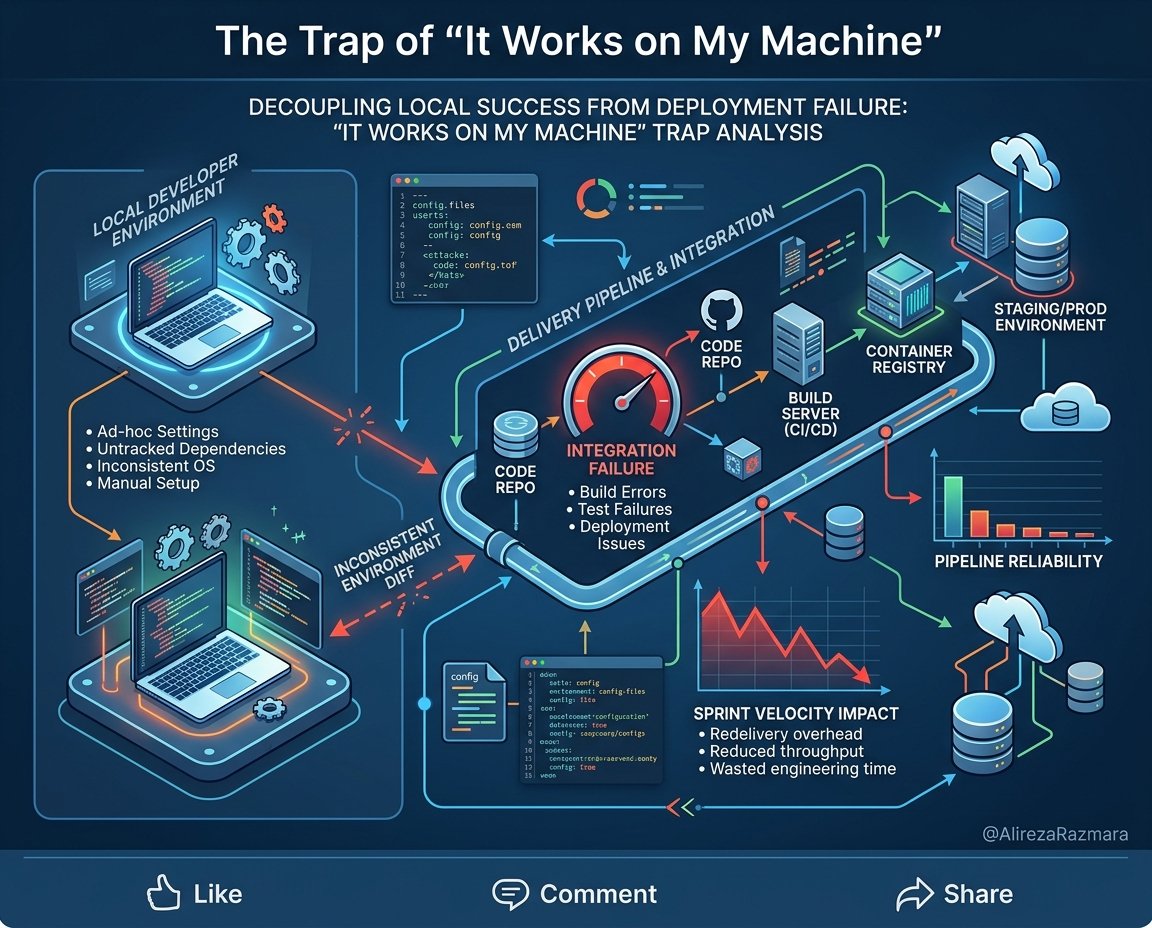
The Trap of “It Works on My Machine”
How many times have you heard an engineer declare a feature is done, only to watch that exact ticket spend another three weeks bouncing between testing, code review, and frantic bug fixing?
We have all been there. You drag the Jira ticket to the Done column, report a successful sprint in the review, and move on. Two days later, QA opens three new defect tickets. The staging environment crashes. Stakeholders ask why the feature they just saw demoed isn’t actually in production.
In high-performing tech organizations, there is a massive difference between a developer saying “Done” and the team achieving “Done-Done.” That difference is governed entirely by your Definition of Done.
What is the Definition of Done (DoD)?
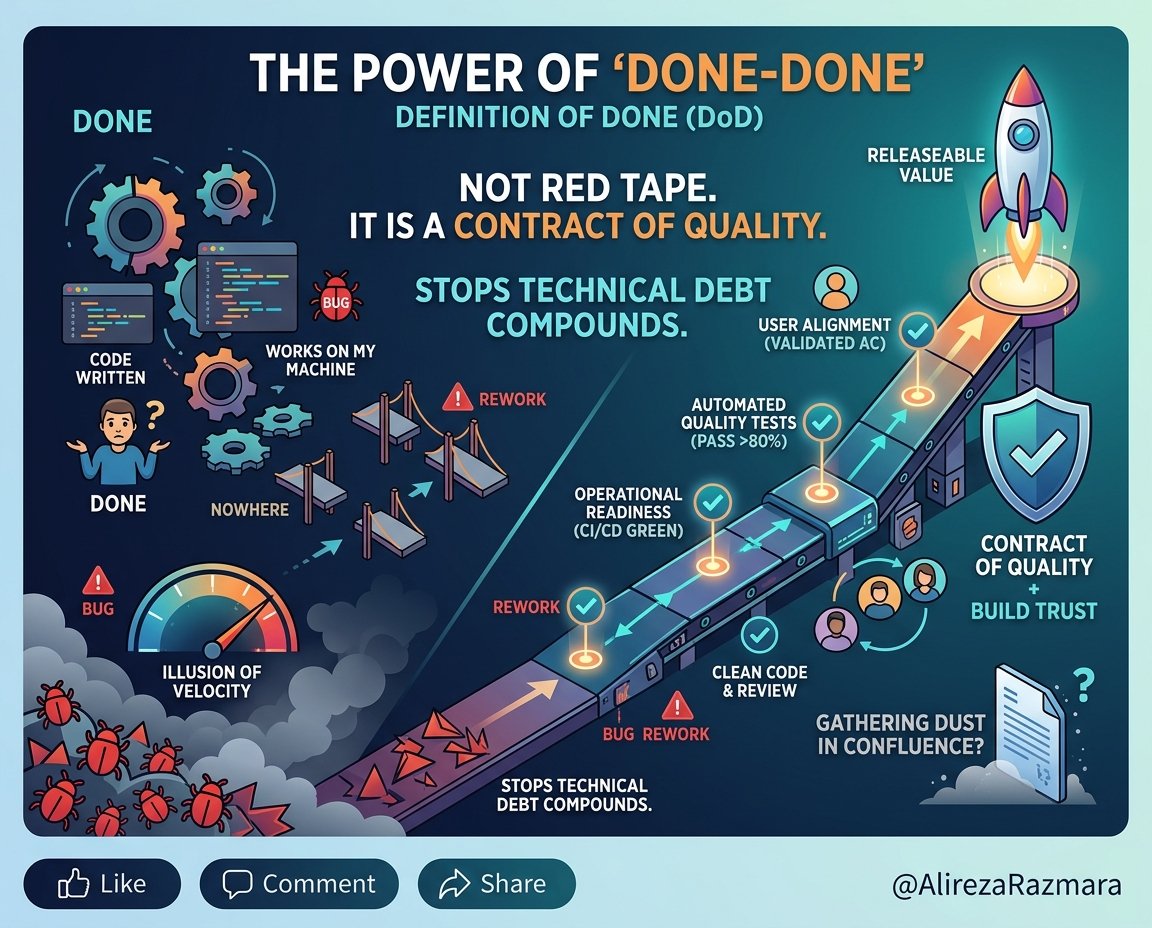
The Definition of Done is a shared, transparent standard that a product increment must meet before it is considered releasable. It serves as your team’s formal contract of quality, ensuring that every piece of work delivers actual, usable value without leaving hidden technical debt behind.
Many teams mistake the DoD for bureaucratic red tape or an arbitrary checklist created by a Scrum Master to slow things down. That is a fundamental misunderstanding. The Definition of Done is the baseline for predictability. Without it, you are not doing Agile software development. You are just writing code and hoping for the best.
The Illusion of Sprint Velocity
If your team lacks a robust DoD, your sprint velocity is an illusion. You might look highly productive on a burndown chart, but you are unknowingly compounding technical debt sprint after sprint.
When a ticket is marked done but still requires manual regression testing, a security review, or deployment script updates next week, you are borrowing time from future sprints. The work is incomplete. By the time that technical debt comes due, your engineers will be caught in a vicious cycle of late-stage firefighting, leaving zero capacity for new feature development.
The 5 Pillars of a Modern, Value-Driven DoD
A practical Definition of Done goes far beyond “Code compiles and passes basic QA.” Here is what a mature, modern DoD actually looks like in practice.
1. Clean Code & Peer Review
Writing code is only the first step. For an item to be done, the code must be readable, maintainable, and reviewed by a peer. This means the branch is fully merged into the main development line. Furthermore, the codebase must show zero critical static analysis warnings. If your SonarQube or similar linting tool is flashing red, the ticket stays in progress.
2. Automated Quality and Testing
Manual testing alone does not scale. A strong DoD mandates automated quality checks. Unit tests, integration tests, and critical regression test suites must pass completely. High-performing teams typically set a strict test coverage threshold—often greater than 80%—for any new code added. If a developer builds a brilliant feature but writes zero tests, it is not done.
3. Operational Readiness
It does not matter if it works on a local laptop. Operational readiness means your CI/CD pipeline is green and the increment is successfully deployed to a staging or pre-production environment. Logging, monitoring, and alerting must be configured. If the feature breaks in production, operations and support teams need to know exactly how to track the error.
4. User & Product Alignment
Engineering perfection means nothing if the business value is missing. The Product Owner or a designated proxy must validate the acceptance criteria against real business goals, not just verify that a few UI checkboxes were ticked. Does the feature actually solve the user problem stated in the original user story? If not, the work is incomplete.
5. Zero Known Regressions
Every new feature carries the risk of breaking an old one. A mandatory item on your DoD must be that no new high-priority bugs are introduced into the existing system. The core functionality of the product must remain stable. If shipping a new search filter breaks the checkout cart, your increment fails the definition.
The Leadership Truth: Quality Over Speed
A strong Definition of Done does not slow your engineers down; it protects them.
There is a persistent myth among project managers and stakeholders that enforcing strict quality standards ruins agility and slows time-to-market. The reality is exactly the opposite. Rework is the ultimate velocity killer. Pushing half-baked features out the door to meet an artificial deadline guarantees that your engineers will spend next month fixing bugs instead of building value.
By enforcing a rigorous DoD, you eliminate rework and prevent context switching. You build unshakeable stakeholder trust because when engineering says something is finished, the business knows they can take it to the bank. True agility delivers usable, reliable value at the end of every iteration. No excuses.
If quality is negotiable under deadline pressure, your DoD does not exist. It is just a suggestion.
Rescuing Your DoD from the Confluence Graveyard
Many teams actually have a decent Definition of Done. The problem? It was written two years ago during an Agile transformation workshop and has been gathering digital dust in a Confluence document ever since.
A DoD is useless if it is not a living, breathing part of your daily workflow. Here is how to operationalize it:
- Automate the Gates: Build your DoD into your CI/CD pipeline. If the code coverage drops below the agreed threshold, the build should automatically fail. Don’t rely on human memory when a machine can enforce the rule.
- Jira Workflow Integration: Add a mandatory checklist or a transition screen in Jira. Before a ticket can be dragged to ‘Done’, the developer must physically check off the DoD criteria.
- Refine During Retrospectives: Your DoD should evolve. If a critical bug slips into production, bring it up in the retrospective. Ask, “What can we add or change in our Definition of Done to catch this next time?”
- Keep it Visible: Print it out and put it on the wall if you are in an office. If you are remote, pin it to the top of your team’s Slack or Teams channel. Keep it front of mind.
Closing Thoughts for Agile Teams
Getting to “Done-Done” requires discipline. It requires Scrum Masters willing to have uncomfortable conversations. It requires Product Owners willing to say “No, I will not accept this yet.” It requires engineers who take pride in their craft.
Stop accepting almost done. Start defining quality, enforcing your standards, and watching your team’s predictability skyrocket.